
Innovating below the surface
At the Ti Tree Bend Sewage Treatment Plant in Launceston, innovation isn’t just about building new sewerage infrastructure - it’s about rethinking how it’s designed, delivered and integrated to achieve better outcomes for Tasmanian communities and environment.
As part of the Tamar Estuary River Health Action Plan, TasWater’s Ti Tree Bend Sewage Treatment Plant Upgrade will play a critical role in improving water quality for the Kanamaluka/Tamar Estuary. Beyond its environmental benefits, the project demonstrates how innovative engineering solutions can deliver smarter, more sustainable and more efficient outcomes in how wastewater is treated.
Building less to achieve more
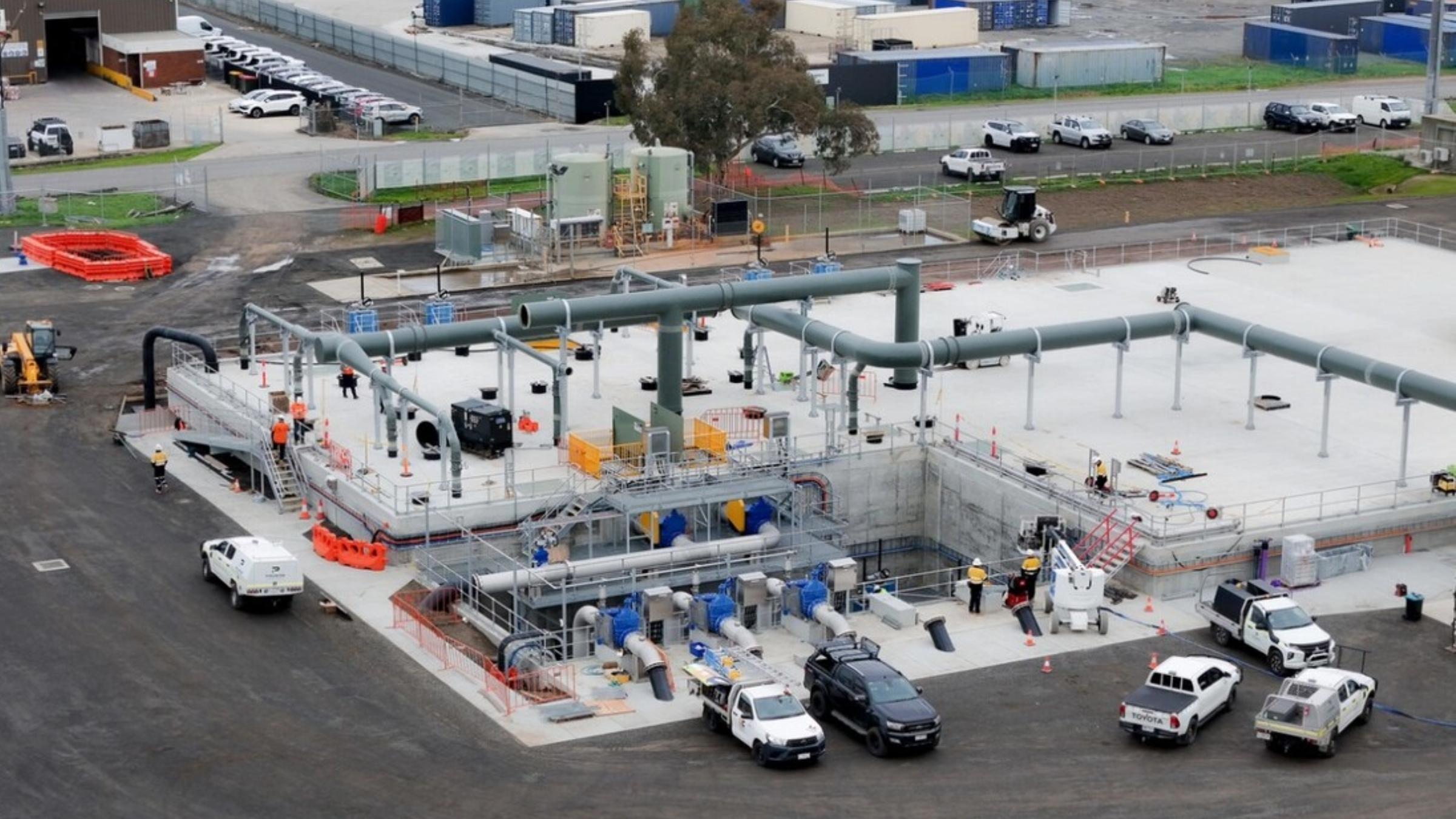
One of the project’s key innovations is a redesign of the sewage storage tank, originally planned as a 50-metre circular tank located outside the treatment plant, the solution was redesigned as a 65 metre by 40 metre rectangular tank constructed within the footprint of existing sludge lagoons.
This new design eliminates approximately 300 metres of transfer pipelines, along with associated electrical and communications infrastructure, resulting in a more efficient layout with less materials, lower costs and improved integration for future treatment plant upgrades.
Transforming challenging ground conditions
The project required a new approach to ground engineering from the structural and geotechnical teams to combine mass soil mixing and continuous flight auger piling solution to strengthen the ground significantly, and eliminate the need for more traditional methods such as jet grouting and sheet piling. This innovative solution also allowed for the storage tank’s base slab thickness to be reduced by half - saving material use, time and money in the process.
One integrated solution replacing three
A standout innovation on the project was the creation of a large-scale mass soil mixing block measuring 58 metres by 77 metres by 7 metres.
This single system simultaneously provided:
- Groundwater and seepage control
- Stable excavation support
- A structural foundation platform
By replacing multiple conventional systems with one integrated solution, the team improved efficiency, safety and reduced complexities.
Reducing materials, waste and emissions
Key sustainability outcomes across the project included:
- Reducing cement consumption by approximately 4,200 tonnes
- Reusing around 10,100 metres³ of excavated material as backfill
- Using two million litres of recycled effluent for hydrotesting instead of potable water
These innovations significantly reduced waste, transport movements and overall environmental impact.
Faster delivery through collaboration
Early contractor involvement meant construction planning was built into the design process from the beginning. This proactive step helped improve the construction sequencing, reinforcement details and formwork design. As a result, the storage tank was completed ahead of schedule, highlighting the benefits of strong collaboration and early planning.
Delivering lasting impact
The project has been an excellent example of a collaborative partnership, funded by the Australian Government, Tasmanian Government, City of Launceston and TasWater.
Once complete, the Ti Tree Bend Sewage Treatment Plant Upgrade will show how creating long-term value by improving environmental outcomes and strengthening the reliability and resilience of vital infrastructure.
Through smart design, innovative construction and a collaborative approach, the project is setting a strong example for future water infrastructure projects.
The project is scheduled to be completed during 2026.